Smoked olive
Translucent gloss on the exterior. The glass and fragrance colour remain part of the final appearance.

DESIGN STUDY · DG-001
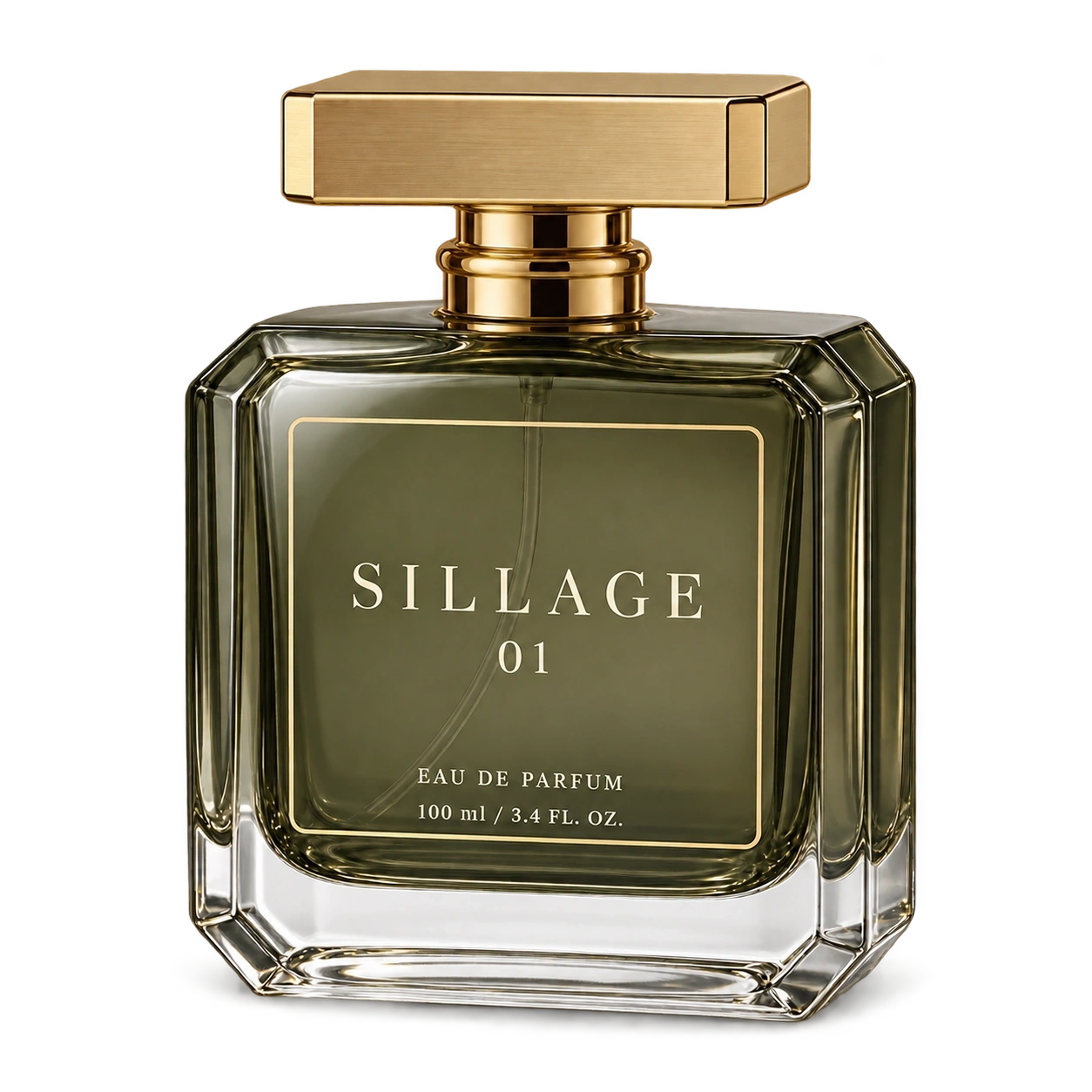
An architectural bottle softened by translucent olive colour. Ivory typography keeps the front legible; a champagne foil frame and coordinated cap add a measured metallic accent.
DESIGN DIRECTION
Sillage 01 pairs the broad face of a classic square bottle with a deliberately simple decoration scheme. The olive body suggests warmth and depth, while the uncoated glass heel keeps the base visually light. The frame stays inside the flat front panel, giving the typography space without carrying fine artwork over the bevels.
Translucent gloss on the exterior. The glass and fragrance colour remain part of the final appearance.
One screen-print colour for the wordmark and supporting text, with clear contrast against the olive body.
A restrained metallic foil frame, coordinated visually with the cap and pump collar.
BOTTLE & COMPONENTS
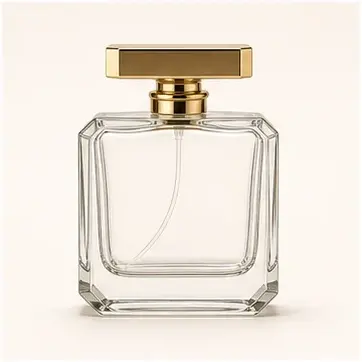
The Classic Square Sprayer in our Products collection is the silhouette reference. This study proposes a new decoration and coordinated closure finish; it is not a confirmed specification for that catalogue item.
PROPOSED DECORATION ROUTE
The sequence below is the development route for this design. Coating, ink, foil and curing conditions must be qualified together on the selected bottle before production.
Check the mould surface, flat print area and component drawing. Keep the foil frame clear of bevels and mould seams; establish artwork registration from a repeatable bottle datum.
Approve the decoration drawing, artwork separations and printable area.
Clean the exterior using a process compatible with the selected coating. Mask the mouth, sealing surfaces and clear lower heel; keep the interior free of decoration.
Agree the mask boundary and acceptable transition on a physical sample.
Spray a compatible transparent olive coating externally and cure to the coating supplier’s validated schedule. Control coverage around shoulders and corners so the colour remains even.
Approve colour and transparency on the actual bottle, empty and with the intended fill.
Screen print the front wordmark and supporting text with a compatible organic ink. Use one colour and a dedicated fixture; qualify the curing sequence against the lacquer beneath it.
Inspect legibility, registration, ink coverage and adhesion.
Use a foil system qualified for the lacquer, with a compatible primer or screened adhesive where required. Transfer the frame using a shaped die and controlled heat, pressure and dwell time.
Check clean edges, complete transfer and resistance to handling; set limits from the approved trial.
Develop a satin champagne finish on the aluminium cap shell and select a suitable inner insert. Match the collar visually, then check the complete assembly with the selected pump.
Approve cap retention, fit, spray performance and leak-test results before release.
SAMPLING & APPROVAL
Review lacquer transparency, gloss, foil shade and the clear-heel boundary under agreed lighting. A physical master sample defines the finish; screen colours are only a starting point.
Agree adhesion, rub and scratch checks, together with exposure tests using the intended fragrance or relevant simulants. Confirm test methods and acceptance limits for your project.
Evaluate the bottle, pump, cap and insert as one system. Confirm leakage, cap retention and protective packing through an agreed handling and transport test plan.
Share your fragrance positioning, preferred bottle size, artwork and target quantity. We will review a suitable bottle and decoration route for your brief.