Transparent garnet
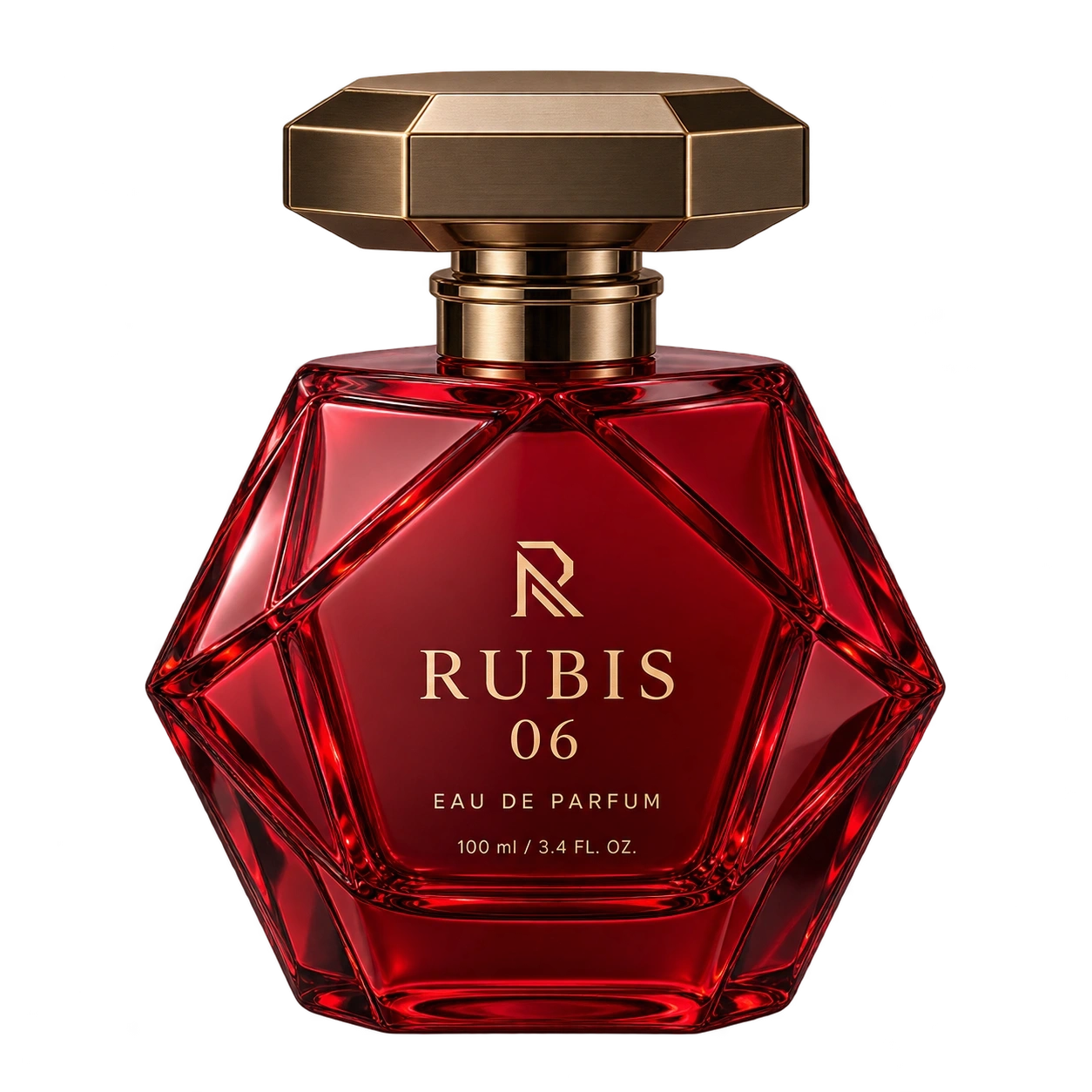
A red exterior lacquer covers the visible glass, including the heel. Aim for a readable central face and luminous edges rather than an opaque burgundy block.

DESIGN STUDY · DG-006
A smooth central facet holds the R monogram and fragrance information. Around it, angular shoulders and side planes break the light into ruby highlights. The bronze cap repeats that geometry at a lower, wider scale.
DESIGN DIRECTION
Rubis 06 concentrates decoration on one face. There is no printed border competing with the bevels: the geometry creates its own frame. Red continues through the visible heel, where thicker glass and longer light paths produce a deeper tone than the central panel.
A red exterior lacquer covers the visible glass, including the heel. Aim for a readable central face and luminous edges rather than an opaque burgundy block.
A satin bronze tone gives the polygonal cap weight without mirror-like glare. Match its collar closely while allowing the bevels to reflect differently.
A single metallic-ink artwork carries the geometric R, RUBIS 06, EAU DE PARFUM and 100 ml / 3.4 FL. OZ. Keep every character inside the broad central facet.
BOTTLE & COMPONENTS
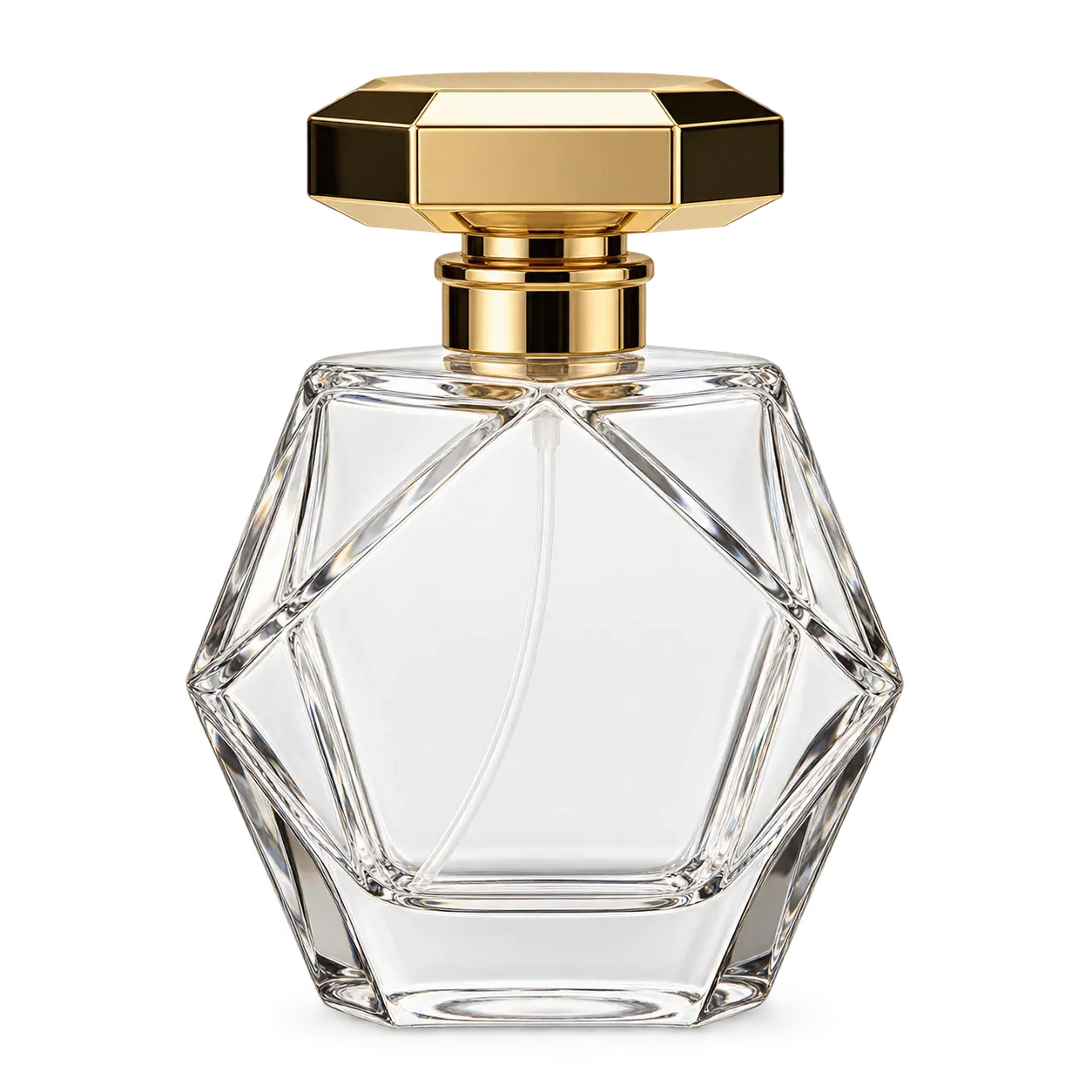
The Faceted Luxury reference supplies the angular body direction. Confirm the flat printing land, bevel junctions and shoulder geometry on the actual glass drawing. The low polygonal bronze closure requires its own dimensional and retention review.
PROPOSED DECORATION ROUTE
Red lacquer can appear much darker at corners and in the thick heel. Establish its distribution first, then qualify metallic print and closure alignment on the same finished bottle.
Position the geometric R and text within the central facet. Locate the fixture from the base and side geometry so print rotation is repeatable.
Approve bevel clearances and the final capacity wording.
Clean the body and mask mouth and sealing areas. Define a support point beneath the base while leaving the visible heel available for colour.
Inspect edge cleanliness and fixture stability before spraying.
Trial controlled passes across the face and angled sides. Avoid excess build at bevel junctions; cure within the selected coating system’s validated window.
Review colour on the face, corners and thick heel with the intended fill.
Screen print the R, RUBIS 06, fragrance type and capacity onto the flat facet using a compatible metallic ink. Keep the screen clear of the surrounding bevels.
Check metallic coverage, fine lines and adhesion to the red coating.
Develop the satin bronze cap and collar together. Review the polygonal edges for uneven finishing, and assemble the retention insert.
Approve metal colour, edge coverage and cap-to-collar consistency.
Fit the selected pump and orient the cap to the front facet. Use a shaped pack insert that supports the body without loading its projecting corners.
Check cap position, spray operation, leakage and contact points in the pack.
SAMPLING & APPROVAL
Compare the central face, bevel junctions and heel under agreed lighting. Evaluate filled samples, because the liquid and glass thickness change the perceived red. Set acceptable variation from a physical reference.
Test ink and coating as one system for adhesion, rubbing and fragrance exposure. Inspect the R corners and small capacity text for missing ink or loss of contrast.
Inspect glass edges and standing stability. Confirm cap orientation and retention, then assess abrasion and impact in the proposed packaging with filled bottles.
Define the red, metallic artwork and bronze closure as a coordinated packaging programme.